Exploring Rio de Janeiro: Four Days of Beaches, Heights, History, and Timeless Elegance
In December 2025, I spent four unforgettable days in Brazil’s coastal icon, Rio de Janeiro. The city immediately revealed its personality through sound, movement, color, and contrast. Mountains rise straight from the sea, historic churches stand beside modern streets, and beach life pulses with music and motion. Each day offered a distinct rhythm, and together they formed a layered portrait of the city.
Day One: Ipanema, the Sea, and Lunch at Garota de Ipanema
My first full day unfolded along the shoreline in Ipanema, where the Atlantic met the city with rolling waves and warm sand. The neighborhood moved at an easy pace. Joggers traced the water’s edge, surfers waited for the right break, and the curve of the coastline drew the eye toward the distant twin peaks of Dois Irmãos. I spent the afternoon soaking in the beach culture and the simple pleasure of watching Rio move in real time.
Lunch brought me to Garota de Ipanema, the legendary corner restaurant tied forever to the song that introduced this neighborhood to the world. Inside, the atmosphere was casual and relaxed. Over classic Brazilian dishes and cold drinks, I felt connected not just to the food, but to the music, the stories, and the layered cultural history that thrives quietly inside everyday spaces here.
Day Two: Corcovado and Sugarloaf
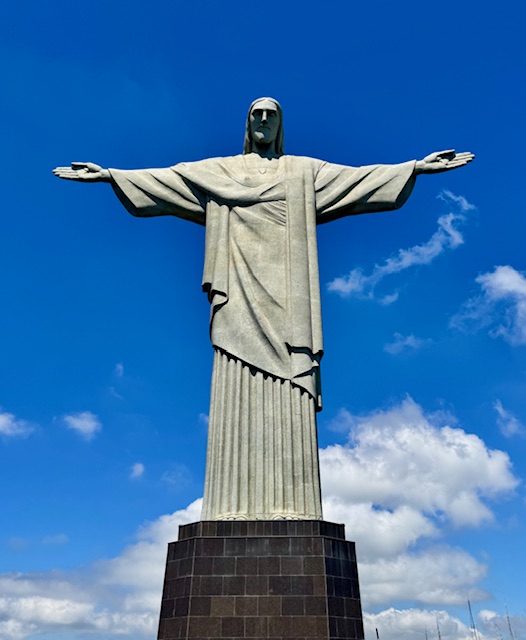
The second day carried me into the heights above the city. The morning began with the ascent of Corcovado, home of Christ the Redeemer. As we climbed through lush rainforest, the city slowly revealed itself below in fragments of coastline, rooftops, and water. Standing beneath the statue and looking out across Rio felt surreal. From that height, the city appeared both vast and intimate at once.
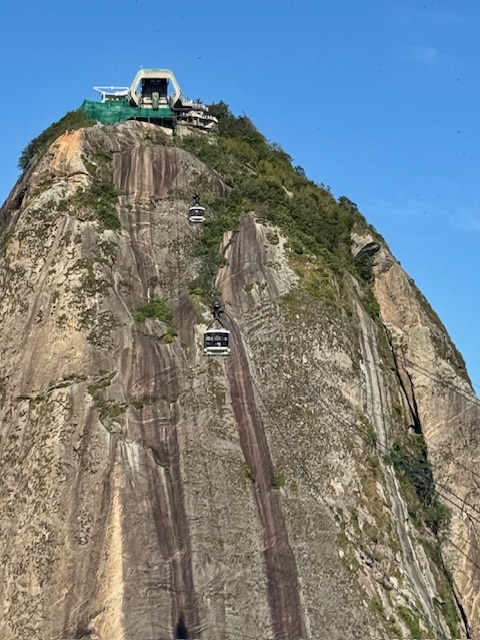
Later that afternoon, I made my way to Sugarloaf Mountain. The cable car ride lifted me between granite peaks suspended above Guanabara Bay. At the summit, Rio opened fully. Copacabana stretched in a perfect arc, boats drifted across the harbor, and the Christ statue stood watch in the distance. It was one of those rare views that feels impossible to photograph because the scale and beauty exceed the frame.
Day Three: Downtown Rio, Sacred Spaces, Selarón, and Zazá Bistrô
The third day led me into downtown Rio, where the city’s oldest layers remain alive in stone, glass, and shadow. I began at the astonishing Metropolitan Cathedral of Saint Sebastian, a dramatic modern structure shaped like a vertical pyramid. Inside, towering stained-glass panels flooded the vast interior with shifting light and color.
From there, I continued to the historic Igreja da Candelária, where marble columns, domed ceilings, and neoclassical detail reflected Rio’s colonial past. Nearby, the sweeping arches of the Lapa Aqueduct stretched across the street like a bridge between centuries.
Just beyond it, I arrived at the vibrant Escadaria Selarón. The hand-tiled staircase exploded with color, each ceramic piece contributing to a global mosaic of blues, reds, yellows, and pattern. Standing there, surrounded by movement and cameras and laughter, felt like standing inside the city’s creative pulse.
After a full day downtown, I ended with a relaxed lunch at Zazá Bistrô. The space felt intimate, warm, and casually artistic. The food mirrored the atmosphere, Brazilian flavors layered with global influence. It was the perfect way to unwind after a day of stone, steps, and sacred spaces.
Day Four: A Timeless Farewell at Café Confeitaria Colombo and Copacabana Palace
My final morning returned me once more to downtown, this time for a quiet farewell at Café Confeitaria Colombo. Stepping inside felt like crossing into another century. Crystal chandeliers glowed above carved wood and towering mirrors. Over coffee and pastries, the city seemed to slow its pace just long enough for reflection.
The café carried the quiet weight of history. Writers, politicians, artists, and travelers had all once taken their seats here. For a moment, I joined that long procession of lives passing through. It was a graceful and fitting goodbye to a city that moves with both power and poetry.
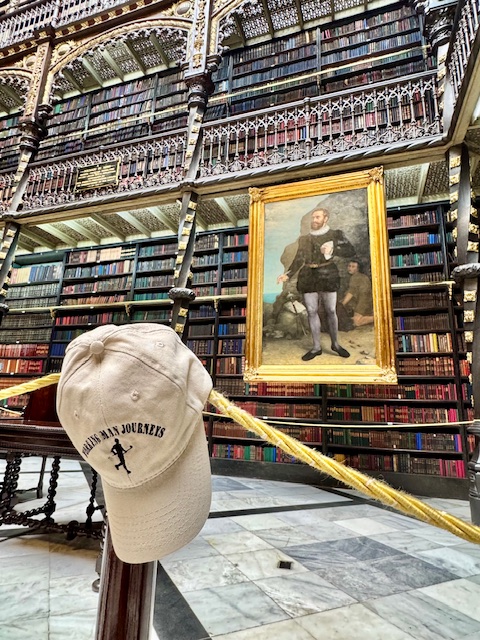
One of the most unexpectedly breathtaking stops in Rio is the Real Gabinete Português de Leitura, the Portuguese Reading Room. From the outside it is easy to miss. Step inside and it feels like you have walked into another century.
Towering shelves stretch from floor to ceiling, carved in dark wood and lined with more than 350,000 volumes, many of them rare works from the 16th to 18th centuries. Light pours down from the stained-glass ceiling, catching the gold details in the bindings and giving the entire room a quiet, reverent glow. It is not simply a library, it is a cathedral to knowledge.
As the day drew to a close and my time in Rio neared its end, I made my way to the Copacabana Palace for a final dinner. The hotel stood gracefully along the edge of Copacabana Beach, glowing softly in the evening light. Inside, dinner felt both celebratory and reflective. The quiet elegance of the Palace, paired with the sound of the ocean just beyond the windows, created a memorable final scene.
Hours later, I left for the airport with the lights of Copacabana fading behind me. It was the perfect ending to four days of beauty, history, and unforgettable views in one of the most remarkable cities in the world.